
Matheus Rufino
Founder and CEO
PhD in Physics. Principal author of the index's formal basis.
Quantum Exposure Index · IEQ
It combines public cryptographic signals from the domain with a sector assumption: how long captured ciphertext may retain strategic value for an adversary.
Quantum Exposure Index
Public signals from the main domain, interpreted alongside sector assumptions.
Dataset and methodIn an HNDL scenario, an adversary may store encrypted traffic they manage to capture. The risk depends on whether that captured content still has strategic value to them when its encryption can be broken.
Traffic may be copied.
The encrypted copy is stored.
A cryptographically relevant computer may break the key exchange.
Harvest now, decrypt later (HNDL) scenario. The arrival date of this computer is uncertain; schematic, not to scale.
Public reach allows traffic to be observed and stored. An exchange vulnerable to Shor makes future key breaking possible. The diagram shows how these conditions combine in an HNDL scenario.
| Resistant to Shor | Vulnerable to Shor | |
|---|---|---|
| Not publicly reachable | Outside public reachThe service is not accessible on the public surface. | Outside public reachThe exchange is vulnerable, but the traffic is not accessible on the public surface. |
| Publicly reachable | Observable trafficThe traffic is externally reachable; the observed exchange is resistant to Shor. | Technical HNDL conditionThe traffic is externally reachable and the observed exchange is vulnerable to Shor. |
The matrix shows technical potential, not confirmed capture. Public reach makes traffic observable; an exchange vulnerable to Shor may allow the key to be broken in the future. IEQ also uses a sector assumption about how long captured ciphertext would retain strategic value for an adversary.
HNDL matters if captured content still has strategic value to an adversary when a cryptographically relevant computer can break the key exchange in use.
These examples are schematic and do not represent timelines measured by IEQ. The band marks an uncertain future; the axis has no date scale.
The October 2026 edition covers 80,182 organizations across several countries. A sector was recognized for 74,831 of them, across 14 sectors.
Report data · collected October 16, 2026
The public sample report uses IEQ 2026-S2: seven finance domains compared with 25,826 organizations in the sector.
Open the full report (PDF) ↗The IEQ formal basis, a QKD study and the results report have different scopes.
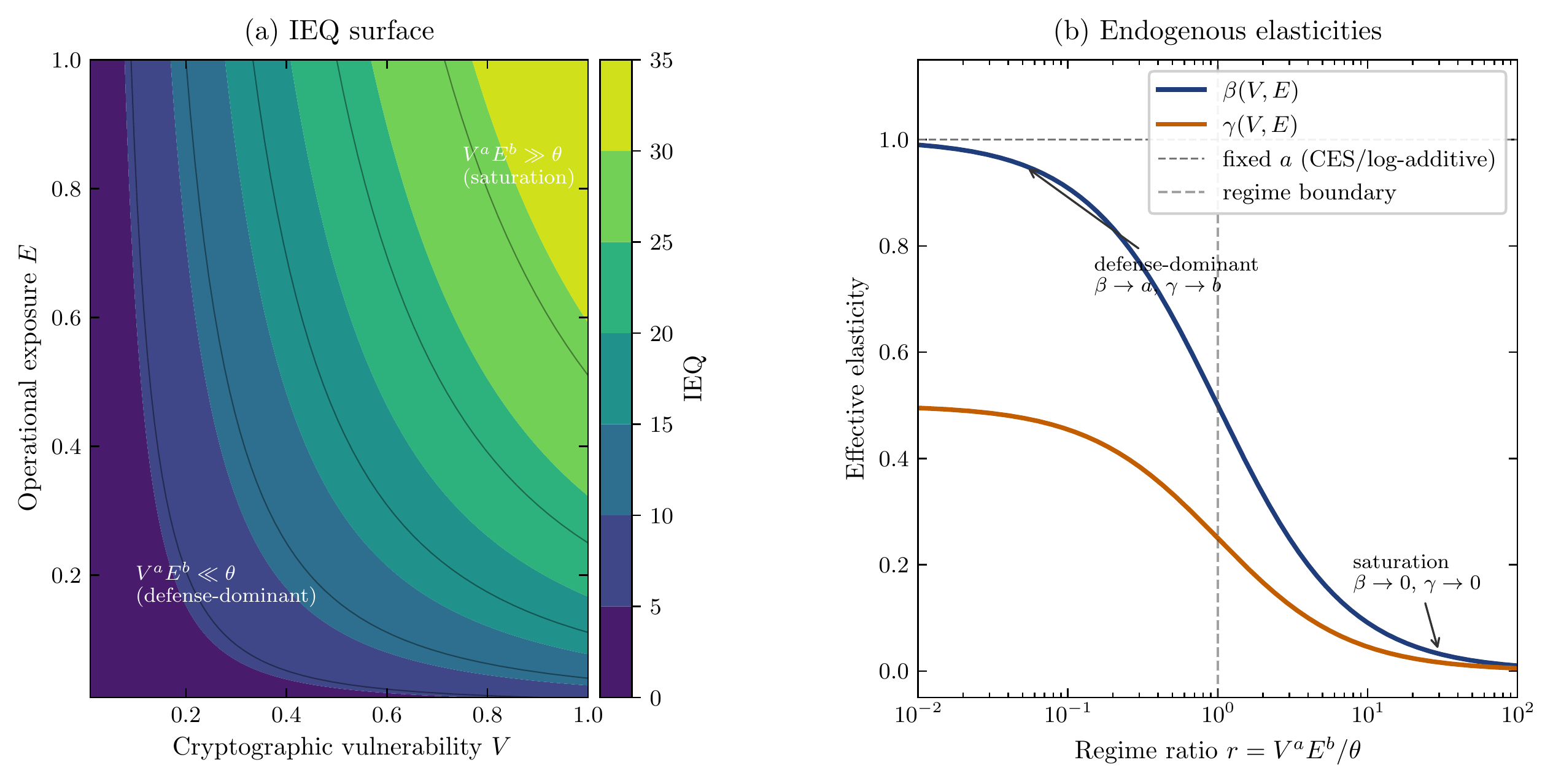
Derives the index form under three attack assumptions. It does not present the index as a globally calibrated probability.
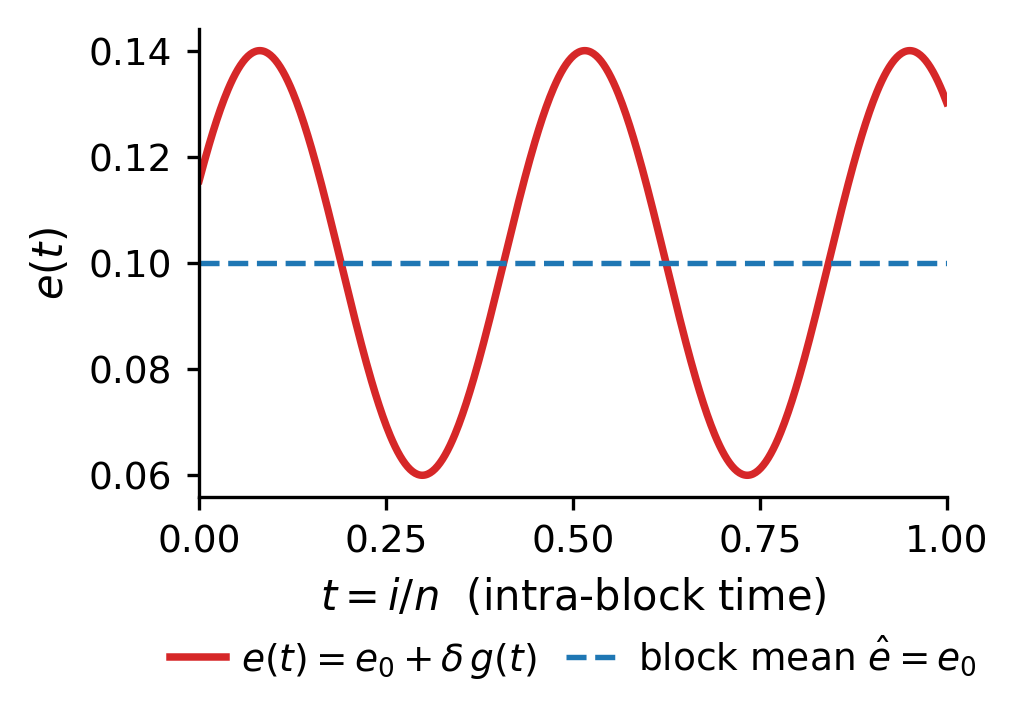
Studies detection limits in QKD. This work does not validate IEQ's TLS measurement.
Reports the median index across 17 sectors for 39,903 organizations.
Applied analyses, such as the HubSpot and Freshworks comparison, are in GWK Insights.
Founder and CEO
PhD in Physics. Principal author of the index's formal basis.

Founder and CTO
Mechanical engineer, MBA in Data Science. Principal author of the study on temporal drift in QKD.

Founder and CSO
MSc in Physics. Principal author of the 2026-S1 technical report.
Send the domain. One of the founders replies within one business day.
Request an assessment ↗